

The LiT List
Glamping & Camping Ideas + Resources
How to Air Condition a Canvas Bell Tent (Portable AC Installation Guide)
There’s nothing quite like relaxing in a canvas bell tent after a day of hiking, paddling, or simply enjoying the outdoors. Canvas naturally stays cooler than many synthetic tents, but when temperatures climb into the 80s or 90s, even the best canvas tent can become uncomfortably warm.
The good news? Yes—you can successfully use a portable air conditioner in a canvas bell tent.
With the right setup, you can enjoy cool, dry air without permanently modifying your tent. In this guide, we'll show you exactly how we installed a portable air conditioner in one of our Life inTents bell tents and share tips for getting the best performance.
Key Takeaways
Yes, you can run a portable air conditioner in a canvas bell tent. The key is venting its exhaust hose outside. On the Timberline Exchange and Zephyr bell tents, route the hose through the wall stove jack hole and the power cord through the utility port, with no cutting needed. Add shade and a fly cover for better cooling.
Jump to
- Can you use an AC in a bell tent?
- Why the exhaust hose matters
- The easiest installation method
- Which models work
- Step-by-step installation
- Tips for better cooling
- Choosing the right AC
- FAQs
Related: Keep A Camping Tent Cool: Fans, Flys and Air Conditioners · Tips To Keep Cool and Keep The Bugs Away · How To Install A Fly Cover To A Bell Tent · Shop Zephyr tents
Can You Put an Air Conditioner in a Canvas Bell Tent?
Absolutely.
Portable air conditioners are becoming increasingly popular among campers, glampers, photographers, event organizers, and anyone spending several days in one location.
Unlike window air conditioners, portable AC units sit on the floor inside your tent and simply require:
- Electricity
- A way to exhaust hot air outside
- A method to drain condensation (depending on the model)
For many canvas tents, routing the exhaust hose can be the biggest challenge.
Fortunately, our Timberline Exchangeand Zephyr Bell Tents include a built-in A/C exhaust port, making them especially well suited for portable AC installations.
Why a Portable AC Needs an Exhaust Hose
Many people assume a portable air conditioner simply blows cold air.
In reality, it removes heat from inside the tent and transfers that heat outside through an exhaust hose.
Without venting that hot air outdoors, the air conditioner would simply recycle the heat back into your tent.
That's why properly routing the exhaust hose is essential for effective cooling.
The Easiest Installation Method
Our installation uses the tent's existing stove jack that is on the wall (not ceiling).
Because the stove jack is already designed to pass a 5" pipe through the tent wall, it also provides a convenient location for routing a portable AC exhaust hose.
The result is:
- No cutting the tent
- No permanent modifications
- Quick installation
- Easy removal whenever you no longer need the AC
Since the exit hole is located on the side of the tent, the setup also keeps the front entrance looking clean and uncluttered.
Which Life inTents Models Work?
This installation method is designed for our:
- Timberline Exchange Bell Tent
- Zephyr Bell Tent
These models include a factory-installed pipe exit hole that makes routing the exhaust hose simple.
If you own another Life inTents bell tent—or a bell tent from another manufacturer—you can still use a portable air conditioner.
Some campers choose to vent the exhaust hose through a screened windowor doorway, while others opt for a more permanent solution by installing a stove-jack flashing kit in the sidewall of the tent.
A flashing kit creates a reinforced opening that can securely accommodate an AC exhaust hose. To protect the opening when it's not in use, you'll also want to sew a canvas cover with Velcro over the flashing kit (these can be found online at Amazon, etc.). This approach requires permanently modifying the tent, but it provides a clean, weather-resistant solution for campers who frequently use air conditioning.
For a step-by-step guide on installing a flashing kit, see our tutorial:
How to Install a Stove Jack Flashing Kit on a Canvas Tent
Every Life inTents bell tent also includes a zippered utility port, making it easy to bring electrical cords safely into the tent without leaving a door partially open.

FOLLOW THESE STEPS TO INSTALL AN A/C IN YOUR TENT
Read through these steps or watch our videoon how to install an AC unit into a canvas tent.
Step 1: Assemble the Portable AC
Most portable air conditioners include:
- the air conditioning unit
- an expandable exhaust hose
- window adapter (not needed for tent installation)
Simply attach the hose to the rear of the unit following the manufacturer's instructions.

Step 2: Position the Air Conditioner
Place the unit near the side of the tent where the stove jack is located.
Keeping the exhaust hose short improves airflow and helps the air conditioner operate more efficiently.
Leave a few inches of clearance around the back and sides of the unit for proper ventilation.
Step 3: Route the Exhaust Through the Stove Jack hole (covered exit hole)
Carefully feed the exhaust hose through the stove jack opening.
Avoid sharp bends that could restrict airflow.
The hose should remain as straight as practical while allowing the air conditioner to sit securely inside the tent.
Step 4: Route the Power Cord
Run the power cord through the tent's utility port.
Because every Life inTents bell tent includes this dedicated opening, you won't need to leave a zipper partially open for electrical access.
This helps keep insects out while maintaining a cleaner setup.

Step 5: Cover the Hose Opening Outside
The exhaust hose on the outside can allow in critters. Therefore we recommend covering it with a vented cap or using mesh and a rubber band.
Step 6: Enjoy a Cooler Tent
Once powered on, your portable AC will begin cooling the tent while exhausting hot air outside.
Depending on outdoor temperatures, humidity, tent size, and the air conditioner you choose, you can often reduce interior temperatures significantly—especially during the afternoon and evening.
Tips for Better Cooling Performance
A portable air conditioner works even better when paired with a few additional strategies.
Add Shade
Keeping direct sunlight off your tent dramatically reduces heat gain.
Natural tree shade is ideal whenever possible.
Use a Fly Cover
Our optional fly coverscreate an additional layer above the canvas, helping reduce solar heat before it reaches the tent itself.
Many customers notice improved daytime comfort simply by adding a fly.
Close the Tent During Peak Heat
If you'll be away during the hottest part of the day, keep windows and doors closed to help maintain cooler temperatures once the AC is running.
Don't Oversize the Exhaust Hose
Keep the hose as short and straight as possible for maximum efficiency.

Choosing the Right Portable AC
The ideal unit depends on your tent size and climate.
Smaller bell tents generally require less cooling capacity than larger models.
Features worth considering include:
- Low operating noise
- Drain-free operation (or self-evaporating models)
- Multiple fan speeds
- Programmable timer
- Energy-efficient operation
Frequently Asked Questions
Will the stove jack be damaged by the exhaust hose?
Portable AC exhaust temperatures are generally much lower than wood stove chimney temperatures. Always follow your AC manufacturer's recommendations and ensure the hose is routed safely.
Can I use this setup in other canvas tents?
Yes, although tents without a stove jack will need another method of venting the exhaust, such as through a screened window or doorway.
Can I run the AC from a generator?
Yes, provided the generator produces sufficient continuous power for the air conditioner you're using.
Does every Life inTents tent include a utility port?
Yes. Every Life inTents bell tent includes a zippered utility port for routing electrical cords into the tent.
Stay Comfortable All Summer
A portable air conditioner can dramatically improve comfort during warm-weather camping.
For owners of the Timberline Exchange or Zephyr Bell Tent, the built-in stove jack makes installation especially clean and convenient.
Combined with a shaded campsite, proper ventilation, and a quality portable AC, you can enjoy cool afternoons, restful nights, and an even more comfortable glamping experience.
If you'd like to learn more about our collection of premium canvas bell tents and accessories, explore our full lineup at LifeinTents.com.

Related Resources
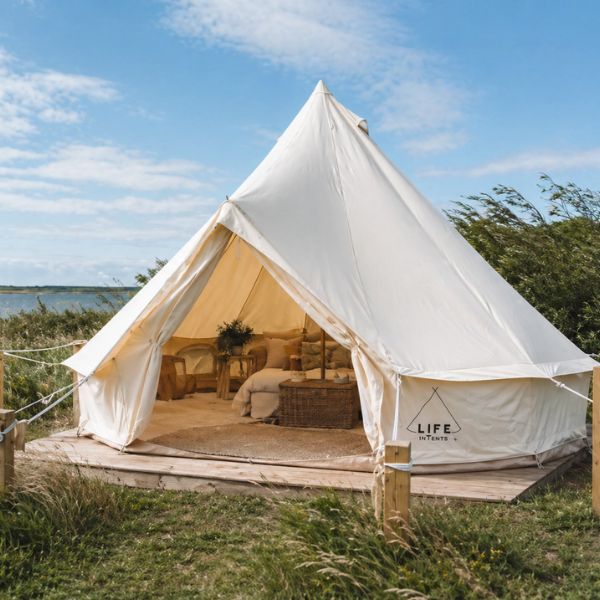
How Do Bell Tents Handle Wind? What to Know Before You Set Up
Canvas bell tents are loved for their roomy interiors, classic shape, and comfortable glamping feel.Bell tents can handle wind well when properly set up. Learn how shape, staking, guy line tension, and long-term anchoring all affect wind performance.

Five Canvas Bell Tents Compared
A bell tent in the 16-foot size class offers room for a bed, furniture, and camping gear. But tentsCompare five popular 5M canvas bell tents. Explore how canvas weight, ventilation, wall height, and included features affect comfort and value—for family camping, furnished getaways, and longer stays.